
2026-11-22T08:57:04-07:000000000430202611
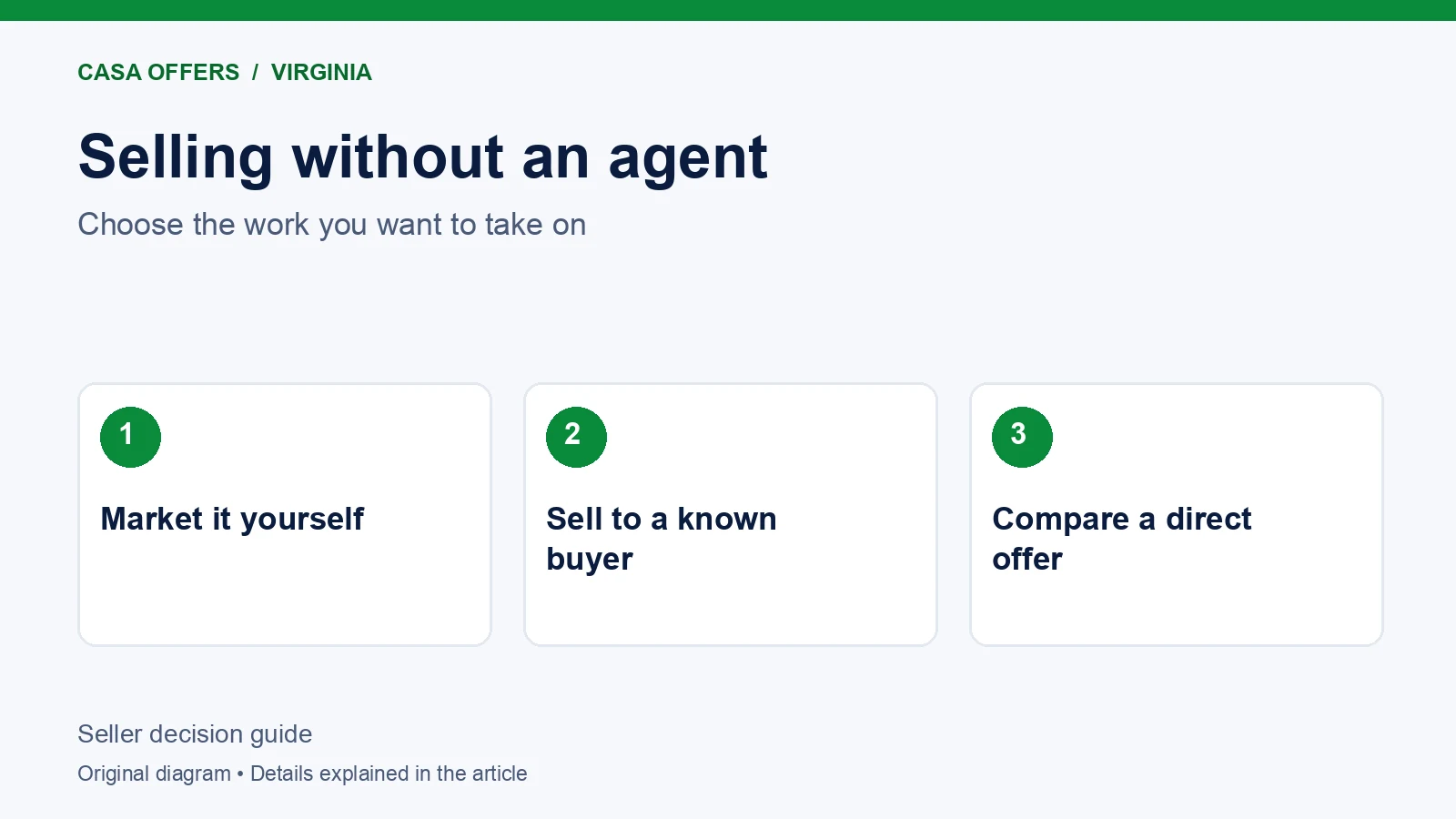
Selling a house without a realtor in Virginia can mean marketing it yourself or selling directly to a buyer you already have.
Either way, you still need a defensible price, a written agreement, the applicable disclosures and a settlement process that gets the property transferred and your proceeds paid. Removing an agent does not remove those jobs.
Maybe the house is ready and you want to manage the sale. Maybe it needs work, and the last thing you need is another person handing you a renovation list. Start by deciding how much of the selling process you actually want to take on. Saving a fee matters. So does finishing the move with money and energy left.
1. Selling a house without a realtor: choose your route
A yard sign can bring conversations without bringing a buyer
A lot of owners start with the people they know: friends, neighbors, their community or people at church. Then a for-sale-by-owner sign goes in the yard. Interest starts coming in, but interest and the ability to buy are different things.
What I hear from sellers is how much time gets spent on “tire kickers.” Someone likes the house but cannot complete the purchase. Someone else wants you to lease it to them or become their bank. Those are different transactions from selling the problem property you want to be finished with.
If your goal is to sell and move on, make that clear before arranging another showing. Ask how the buyer will pay, what conditions remain and when they can actually close. Do not let another week of conversations stand in for a workable purchase plan.
A for-sale-by-owner listing and a direct cash sale are different routes. With FSBO, you find the buyer: set the price, arrange photos and advertising, answer inquiries, coordinate access, evaluate offers and manage the transaction. With a direct sale, the buyer is already across the table. Your work shifts toward evaluating that buyer’s offer and the contract.
You can generally sell your own Virginia property without hiring a listing agent. The owner exemption in Virginia’s real-estate licensing law supports that distinction. It does not give an unlicensed person permission to broker other people’s homes for compensation.
| Route | You take responsibility for | Useful when |
|---|---|---|
| FSBO to an individual buyer | Exposure, showings, screening and negotiations | You have time, access and a house suited to the intended buyer |
| Sale to a buyer you already know | Agreeing price, documenting terms and coordinating closing | The buyer is identified and both sides can obtain appropriate advice |
| Direct sale to Casa Offers | Comparing the offer and confirming your obligations and move | You want an offer for the house in its current condition without a marketing campaign |
Already working with an agent? Start with that relationship
If you have an existing listing agent, we want to talk with your agent and understand why the house is not selling. Is the obstacle the condition, the price, the buyer’s financing or something else? We also need to understand whether a direct sale can proceed under the existing arrangement or whether an agreed release is needed.
Have your listing agreement reviewed before changing course. An agent’s absence from the next conversation does not erase an existing contract or a compensation obligation. If you have already signed with another buyer, have that agreement reviewed separately before accepting a conflicting commitment.
2. Price the house you are selling, not the house after renovation
For a Richmond property, start with recent completed sales of genuinely comparable homes. A renovated house with finished living space is not an automatic comparison for a house needing major systems work. Location, layout, condition, usable space and the buyer’s likely costs belong in the comparison.
Confirm the jurisdiction before collecting records. A Richmond mailing address may be in Richmond city, Henrico or Chesterfield. The Richmond assessor, Henrico real-estate assessment office and Chesterfield assessment office provide starting points for property information. An assessment is not a buyer’s offer or a substitute for a condition-specific valuation.
When selling a house without a realtor, write down which comparable sales support your price and what differs. If you cannot explain why your unrepaired house should bring the same amount as a renovated one, an interested buyer will ask the same question. Get a professional valuation when the uncertainty could materially change your decision.
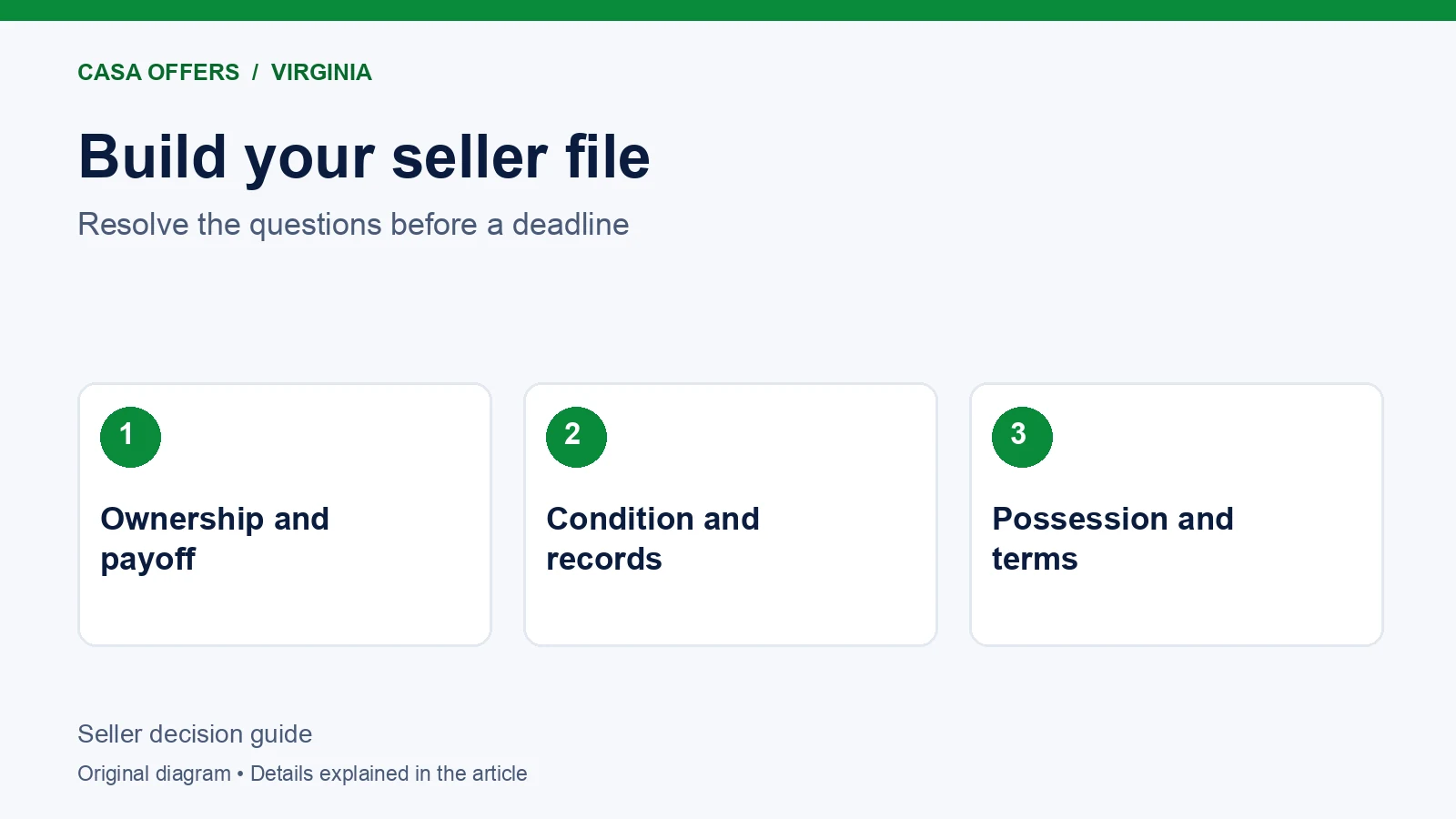
3. Build one seller file before accepting an offer
Pull together the address, owner names, mortgage servicer information, recent tax statement, any association information and what you know about the house’s condition. Add existing leases if someone rents the property. Keep estimates, repair records and relevant notices together instead of trying to reconstruct them during a deadline.
- Ownership: who must sign, and does an estate, trust, entity or divorce affect authority?
- Debt: who will obtain the current mortgage payoff and check taxes or recorded obligations?
- Condition: what do you know, and which reports or permits already exist?
- Possession: who occupies the house, and what can you actually promise about move-out?
- Sale terms: what stays, what leaves and who pays each agreed charge?
The settlement team checks title; a tax record alone does not establish everyone who must sign. A mortgage statement balance is also different from a dated payoff. Ask early who will order that payoff, what authorization is needed and when it expires.
4. Handle Virginia disclosures before they become a closing problem
Virginia’s Residential Property Disclosure guidance explains the buyer-due-diligence framework and points to additional written disclosures that may apply. Do not treat the state’s limited-representation approach as permission to make false statements or conceal a problem. Have a Virginia real-estate attorney determine the requirements and timing for your transaction.
For most homes built before 1978, separate federal lead-paint disclosure rules apply. The EPA explains the required known-hazard information, available records and buyer materials. Resolve the applicable paperwork before the buyer signs, rather than assuming an as-is clause handles it.
This step is one reason selling a house without a realtor still benefits from professional transaction support. The person buying your property has their own interests. Your attorney can advise you on yours.
5. Compare written offers using net proceeds and conditions
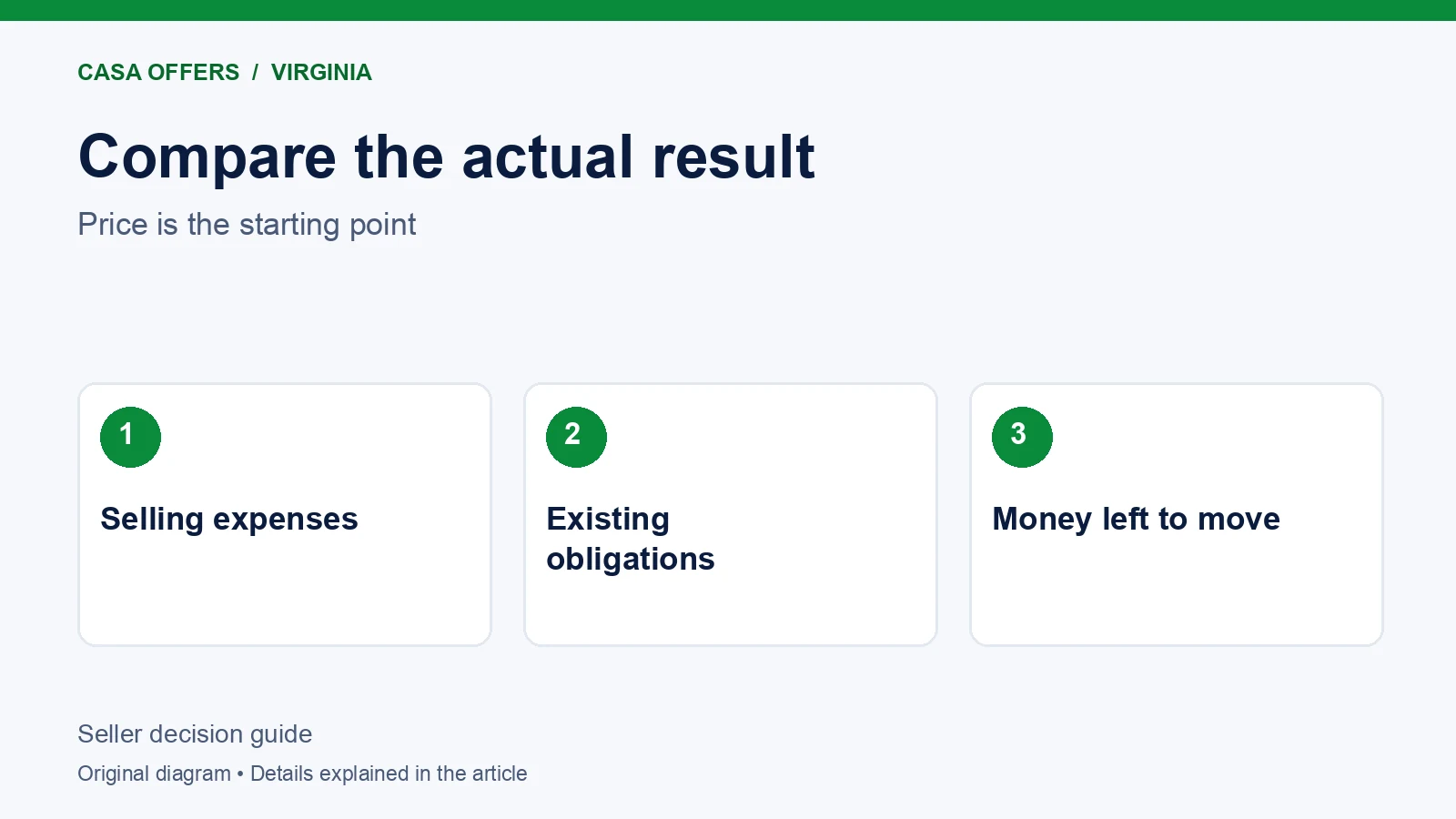
The biggest number at the top is only the starting point. Ask what the buyer can require after inspection, whether financing or an appraisal is a condition, when the earnest-money deposit is due, who holds it and what happens if a party cannot perform. Put the closing date and possession arrangement in the agreement.
There is no universal commission saving or fixed seller-cost percentage to plug into every sale. Existing agreements, negotiated compensation, preparation, concessions and settlement charges differ. Use actual proposed terms.
| Start with | Then account for |
|---|---|
| Written purchase price | Any contractual price adjustments or credits |
| Seller’s selling expenses | Agreed compensation, legal help, preparation and seller-paid settlement items |
| Existing obligations | Mortgage payoff, taxes, liens and other amounts the settlement team identifies |
| Money and time before closing | Carrying costs, cleanout, moving and the risk of a sale falling through |
At Casa, we buy directly and cover the agreed selling and closing costs; the seller remains responsible for existing debts and obligations. Ask for that allocation in the written offer and settlement figures. An owner who owes nothing and a seller with a mortgage will have different proceeds from the same purchase price.
6. Give settlement and move-out their own plan
Identify the settlement agent, document deadlines, required signatures, title issues and the expected funding process. Under Virginia’s settlement-agent choice statute, the purchaser or borrower selects the settlement agent, and the seller can retain their own attorney. Ask who represents whom.
Need remote signing, extra time to move or an arrangement for belongings? Discuss it before signing. A verbal understanding about staying after closing is too important to leave outside the written agreement. The plan should address access, possession, insurance, responsibility and any money retained or advanced.
7. Decide whether the workload is worth the expected return
Selling a house without a realtor is a sensible choice when the responsibilities match your capacity. FSBO may fit someone who can manage access, buyer inquiries and negotiations. Hiring an agent may be worthwhile when marketing reach and representation are what the seller needs. A direct sale may fit an owner who wants to avoid preparation and coordinate a simpler handoff.
You do not have to decide the whole thing before getting information. Compare a realistic listing or FSBO plan with an actual direct offer. Our Virginia repair-priority guide helps with the preparation decision; the Richmond buyer-verification guide helps you assess the buyer.
The first conversation with Casa is free and carries no obligation. Tell us what the house needs, what you can take on and where you want to be after the sale. If the offer does not improve your options, you can choose another route.
Get My Written Cash-Offer Review
If you decide to list your Virginia home, here is how to find and interview a Spanish-speaking listing agent.
Questions about selling a house without a realtor
Can I sell without an agent if I already found the buyer?
Generally, yes, subject to existing agreements and your authority to sell. You still need a written contract, applicable disclosures, title work and settlement. Have the terms reviewed before committing.
Does selling without an agent mean no closing costs?
No. It changes the services and compensation involved, not every cost of transferring the property. A direct buyer may agree to cover selling expenses, but existing debts and the written allocation still matter.
Do I need to fix the house before asking Casa for an offer?
No. Start with the condition today. You can compare an as-is offer with the cost and expected benefit of preparing the house before spending on improvements.