
2026-10-19T15:50:25-06:000000002531202610
Wondering what not to fix when selling a house in Virginia?
Skip the kitchen remodel, the new carpet and the cosmetic makeovers the next owner will tear out anyway. If you’re listing with an agent, put your money into the roof, the HVAC and the appliances, and disclose old leaks instead of covering them. If you sell as-is to a direct buyer like Casa Offers, you can skip the repairs altogether.
The repair list grows the moment you decide to move. Suddenly the kitchen you lived with for years looks unacceptable. The carpet bothers you. Somebody tells you buyers want everything updated, and now selling sounds like a construction project you have to finance first.
Most of that list won’t pay you back. A few items will decide whether a traditional sale closes at all. Here is how to tell the difference, based on what we see walking through Virginia houses before we buy them.
What not to fix when selling a house: six projects to skip
1. The kitchen remodel
The kitchen is where I see sellers waste the most money. They remodel it, but not to today’s standards. The next owner walks in, still sees a kitchen they want to redo, and won’t pay for the one you just financed. Nobody remodels a kitchen exactly the way the next owner wants it.
Watch the scope, too. New counters lead to a new sink, plumbing work, a damaged backsplash and weeks without a working kitchen. Clean it, fix what is actually broken, and leave the remodel to the buyer.
2. New carpet
Fresh carpet feels like an easy win. It usually isn’t. Sellers pay to redo the carpet, and the new owners come in and put down hardwood. You just can’t get the value back out of it.
The same goes for replacing every floor so the house matches. Loose boards, soft spots, odors or moisture damage are a different matter: find out what caused them first. New material over a problem only hides it until the inspection.
3. A bathroom that works but looks dated
An old vanity or tile color is a style problem. A leaking shower or a soft floor is a real one. Leave the style alone, give the room a deep clean, and deal with the specific thing that doesn’t work.
Investigate stains, movement or recurring moisture before anything else. Fresh finishes over them leave the question unanswered, and it will come out during the sale.
4. Every older window, just because it’s old
Age alone isn’t a replacement plan. Check how the windows open, close and lock, and whether any of them let water in, before you replace a houseful. A broken lock or a leaking window needs its own decision; the rest can usually stay. In parts of Richmond, window replacement can also trigger historic-district approvals, covered below.
5. A yard redesign
Clear the access, cut back the overgrowth and haul out the debris. A new patio, retaining wall or planting plan eats money and time before you know whether buyers in your price range will pay for it.
Drainage running toward the house, an unstable tree or an unsafe walkway isn’t a landscaping preference. Get the right professional opinion on those.
6. Layout changes
Opening up a kitchen, moving a bathroom or finishing a basement turns a sale into a construction job, with a full scope, approvals and months of extra bills. It’s a poor candidate for a rushed “let’s just do this before we list” decision. Someone will buy the older layout. The question is whether the work leaves you better off.
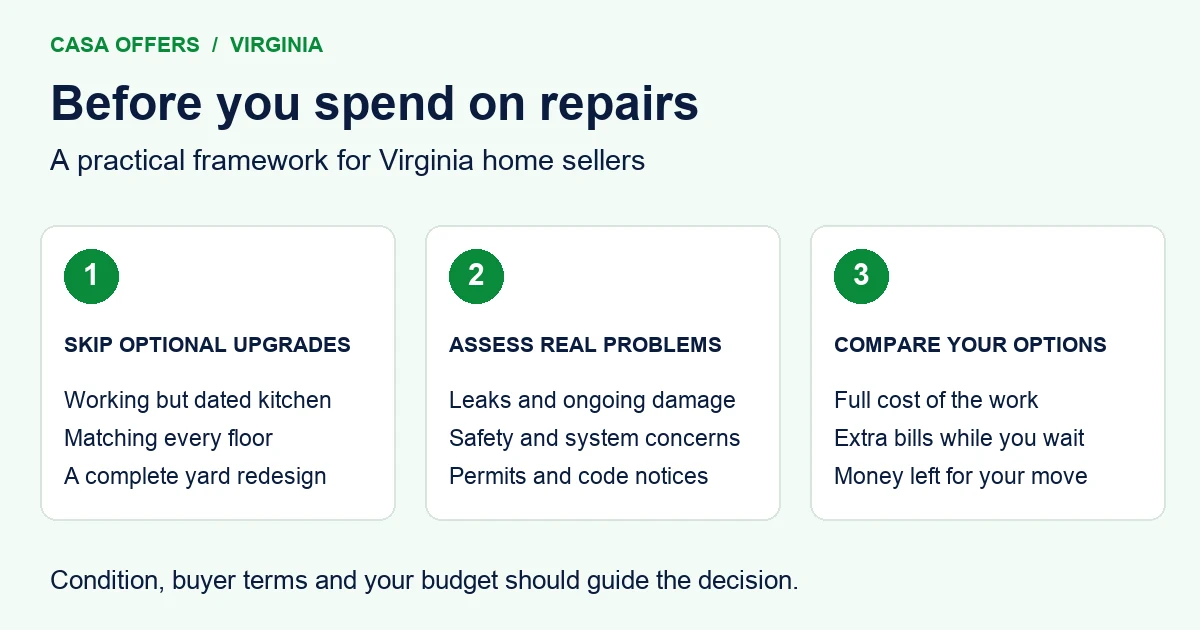
Before you spend on the next project, get the as-is number. Compare a written offer with the repair quotes and selling costs for your house.
What you do have to fix for a traditional sale: roof, HVAC and appliances
Here’s the other side of the list. If you’re listing with an agent, you’re usually selling to people who have to get bank loans, and three things have to work: the roof, the heating and air conditioning, and the appliances. When I say you have to fix them, I literally mean you have to fix them. A financed buyer will have the house inspected, and you’ll end up either making those repairs or taking the discount off your price.
None of them are cheap. It’s amazing how expensive a set of new appliances is, and a roof or HVAC replacement is usually a bigger number still. Get written quotes before you list so you’re working from today’s real cost instead of a guess.
These are also the only upgrades that change what we pay. When Casa Offers buys a house, a new kitchen or fresh flooring doesn’t move our number. A sound roof and working AC do.
Don’t do these repairs yourself
If you’re going to fix it, hire a professional. Self-done repairs backfire. Plenty of sellers think they can handyman a roof patch, a wiring problem or a plumbing leak themselves to save money. Buyers and inspectors can spot amateur work, and then it’s one more thing to explain, discount or redo. Suck it up and hire a licensed professional.
Damage to disclose, not hide
When we walk through a house, the damage sellers most often try to cover up is an old leak: a roof leak, a window AC unit that dripped for years, something like that. Then there’s what’s underneath the house, and the damaged flooring hidden under a rug. Even a leak you fixed years ago can leave the remnants of that repair behind.
Disclose it. It’s all going to come out. A buyer with a bank loan will have the house inspected, so plan on taking the discount off your price instead of hoping nobody looks.
Some problems need a professional opinion before you decide anything:
- Water getting in: identify the source before you decide whether to repair the finish.
- Structural movement or soft areas: get an assessment rather than guessing from a crack or stain.
- Electrical, heating or plumbing concerns: use qualified help to understand safety, function and scope.
- Open permits or code notices: find the actual record and requirements before promising a buyer that everything is resolved.
An assessment doesn’t commit you to paying for the whole repair. It tells you whether to fix it, negotiate around it or sell to a buyer prepared for it. Any existing notice, safety obligation or contract commitment still has to be handled.
A Richmond detail that can change the repair plan
Before ordering replacement windows or exterior work, check the property’s jurisdiction and any historic designation. The City of Richmond’s permitting FAQ lists ordinary repairs that can be exempt from a building permit, with exceptions for work in a City Old & Historic District. It specifically flags replacement siding, roofing and windows in those districts.
A job that looks simple on a contractor’s estimate may need another conversation about approvals. Check the exact address and scope with the city before ordering materials. For a property in Henrico or Chesterfield, use that county’s requirements; a Richmond mailing address alone doesn’t settle which office handles the work.
The cost of waiting, and the price you remember
Repairs don’t just cost money. They cost permits, contractor schedules and time on the market. In my experience, the longer the work drags on, the more new listings come on the market to compete with yours, and the more pressure there is to lower your price. We’ve written about what repeated price cuts really cost Richmond sellers.
The other trap is the number in your head. Sellers fixate on a repair they did 8 to 12 years ago, not understanding that those repairs mean nothing today. Or they remember what a job cost them 15 years ago and forget that inflation has completely crushed the repairs market. Price the work at today’s quotes, not your memory.
Before you approve a project, put these questions on one page:
- What is the written cost of the full job, including anything it’s likely to uncover?
- How long until the work and any required approvals are finished?
- What evidence supports a higher sale price or an easier sale afterward?
- What extra bills will you carry while the work is underway?
- Can you pay for it without jeopardizing the household expenses and the move you’re trying to manage?
The 2025 NAR/NARI remodeling research separates how much homeowners enjoy a project from how much of its cost they’re estimated to recover at resale. A kitchen you would love living with and a kitchen worth financing right before a sale are two different decisions. National survey estimates also aren’t a quote for your house.
Compare the two routes on the same basis
Put a listing with the roof, HVAC and appliances handled beside a sale in the current condition. For each, write down the likely sale price, the quoted repair costs, selling costs, extra housing bills and your expected move date. Label anything that’s still unknown.
A lower offer can leave you less money even when it avoids repairs. A higher listing price can also disappoint after expenses, price cuts and delays. Compare what you expect to keep and when you can move, not just the number at the top of the page.
Before paying a contractor, calculate the cost of waiting to sell.
Can you sell a house in Virginia without making repairs?
Yes. You can offer a house in its current condition through an agent, or sell directly to a buyer who’s prepared for repairs. But “as is” means different things depending on who’s buying.
Sellers often think as-is means broom-clean, swept out and empty, like moving out of a rental. When we say as is, we mean as is. You don’t have to do anything. Sell to Casa Offers and you can skip all the cleaning, skip all the repairs and leave the junk behind. Our walkthrough is only there to confirm the house doesn’t have anything extraordinary beyond what you’ve already told us.
On a traditional listing, as-is is a contract term, not a line in the ad. Virginia REALTORS’ legal explanation says the provision must be expressly included in the contract; advertising the words alone doesn’t create it. It also explains that an as-is clause doesn’t exempt the seller from the Virginia Residential Property Disclosure Act.
Use DPOR’s current disclosure resources and have your agent or a Virginia real estate attorney explain which requirements and contingencies apply to your sale. Don’t assume a buyer has waived an inspection, or that as-is language settles every issue, until you’ve read the agreement.
If you can’t afford the repairs, you’re not stuck
Repairs compete with groceries, family needs, medical bills and the cost of your next place. Getting a new HVAC unit when you can’t make your mortgage payment isn’t going to happen. If there’s no money for a renovation, a selling plan that depends on one doesn’t help you. If the mortgage is already behind, read our guide to selling a house before foreclosure in Richmond.
You don’t have to feel stuck. Life is about taking action to move yourself forward, and one action is enough to get you to the next step. Get a real comparison: a listing with the must-fix items handled, beside an as-is sale with nothing to fix, clean or haul away. Use your house’s actual repair quotes, the buyer’s written terms and your timeline.
You can learn about selling a Richmond house to Casa Offers or ask us to review your Virginia property as one side of that comparison.
You don’t need to finish every project you once imagined for this house. Fix what a financed buyer will insist on, disclose what you know, skip the rest, and keep enough money and energy for the move you’re trying to make.
You can take the next step without taking on a renovation. Tell us about the house in its current condition and decide whether an as-is sale works for you.