
2026-11-26T14:15:32-07:000000003230202611
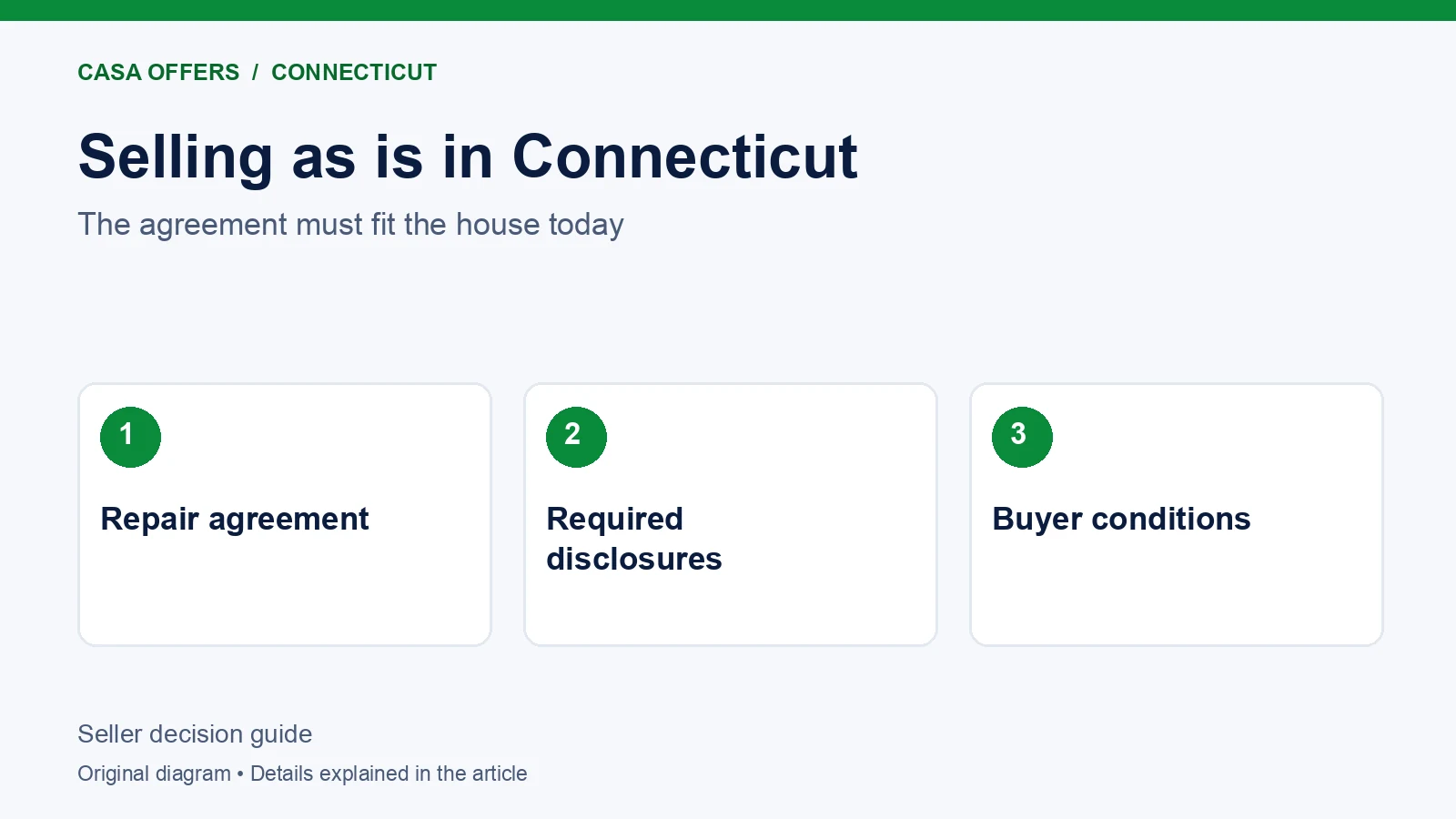
Selling a house as is in Connecticut can let you move without first paying to renovate it.
The important question is what your agreement actually requires: repairs, disclosures, buyer conditions, belongings, costs and the day you hand over the keys. Those decisions determine whether the sale solves your problem or gives you another project to manage.
Maybe the furnace is old, the basement takes water, or the rooms are full of things you no longer want. You can find out what the house might sell for today before putting a contractor on your credit card. Start with the condition you have and the next chapter you need.
I’ve walked into Connecticut homes where the heat was out in winter or there was no cooling in summer. A pipe breaks and a homeowner on a fixed income has to choose between the rest of the repair and groceries or prescriptions. They do enough to get by. If that sounds familiar, start by telling us what the house needs and what you can realistically take on.
1. Selling a house as is starts with a written repair agreement
Ask what the buyer expects you to do between signing and closing. Does the agreement require no repairs, specific work, a repair credit or another condition? Settle that before you accept an offer. “We buy as is” in an advertisement is less useful than the obligations in the contract.
Give the buyer an accurate picture of the property now. Old cabinets, dated flooring and a worn porch are different issues from an active leak or a problem with the foundation. You do not need a renovated house to have an honest conversation, and you should not spend money making it look ready for a buyer whose plan is to renovate.
For a direct Casa offer, start by telling us what you know and what you want to leave behind. Then compare the written proposal with your actual alternatives. The purpose is to reduce the work you have to take on, not leave you guessing about a punch list.
2. Connecticut disclosure rules still matter
An as-is sale does not erase applicable disclosure duties. Connecticut’s residential-condition statute generally requires the report before a buyer signs the relevant purchase commitment, subject to exemptions. Ask your Connecticut real estate attorney which requirements apply to your ownership and transaction.
Use the current Department of Consumer Protection report, rather than an old form from another state. It covers the seller’s knowledge of property issues, including systems, leased equipment and prior reports. Answer accurately; identify what you do not know instead of making a reassuring guess.
For most homes built before 1978, a separate federal lead-disclosure process also applies. Known information and available reports must be provided, with the required documents and inspection opportunity. An agreement not to renovate is not permission to skip that process.
It is reasonable to say, “I inherited this and do not know the age of that system.” It is a different matter to have a report in a drawer and pretend the problem was never identified. Give your attorney the documents early so the paperwork describes the house you are actually selling.
3. Gather records before ordering improvements
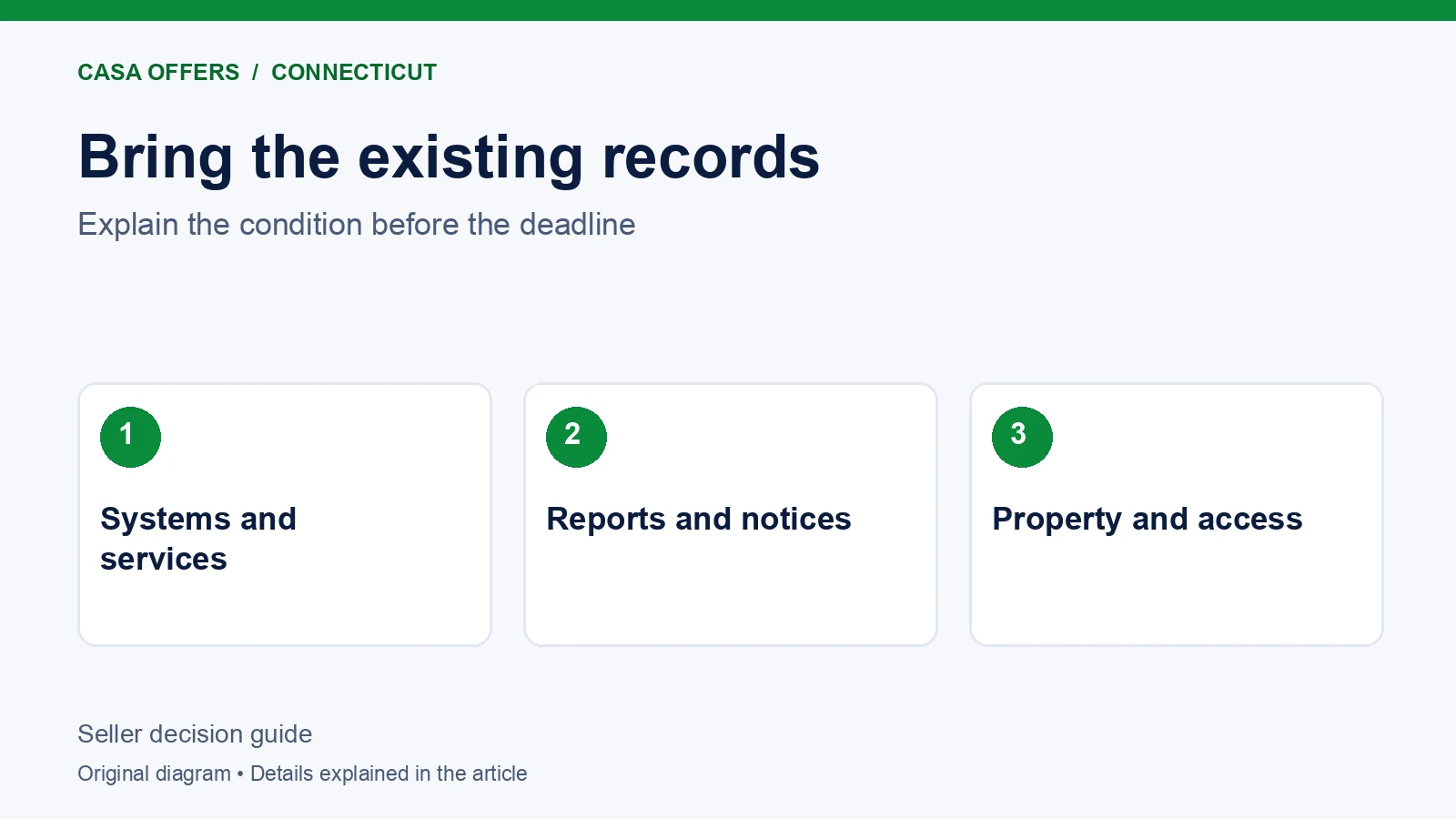
You can make the sale easier without hiring a renovation crew. Put existing records in one folder: estimates, service invoices, inspection results, permits you have, insurance correspondence and any notices about the property. A buyer can evaluate a documented issue more clearly than a different version of the story at every visit.
| Property issue | Useful information to gather | Question for the buyer |
|---|---|---|
| Heating or an oil tank | Service records and any existing tank/removal reports | What work or investigation is included in your offer? |
| Private well or septic | Existing tests, service invoices and known concerns | What access or testing do you need before your decision? |
| Basement or foundation | Prior engineering reports, photos and repair records | Which findings could change your willingness to buy? |
| Condo or leased equipment | Association documents and the actual lease | What must be paid, transferred or approved? |
For a house around the Stafford Springs area or another affected community, do not treat every foundation crack as routine or assume it proves a crumbling-foundation problem. Connecticut’s Department of Housing explains the issue and professional testing. Use actual reports and qualified advice; a cash-offer conversation is not an engineering diagnosis.
Hartford, New Haven, Stamford and Vernon do not have interchangeable houses or buyers. The address, property type, condition and useful local comparable sales matter more than a statewide discount somebody quotes on the internet.
Basement water is one of the issues I hear about most. I want to know where you’ve seen it and whether anybody has traced the cause. If you have a quote for an oil-tank removal or a plumber’s report about a burst pipe, send it. We use what we know about the condition and the work we’ll have to take on to price the offer. I’ve lost money on a rehab. Once the sale closes, Casa carries the repair costs and resale risk for the work it took on.
If the original deed is missing, here is how to find the recorded copy in your Connecticut town.
4. Separate an inspection from a repair demand
Selling a house as is can still involve a buyer’s inspection, appraisal or other conditions if the agreement includes them. Know whether a visit is for evaluating the purchase, satisfying financing, planning construction or checking an agreed item. Those are different jobs.
The Connecticut legislature’s inspection research explains that a general home inspection is not a universal legal requirement. The parties’ terms and the buyer’s financing still matter. Read the actual cancellation rights and deadlines with your attorney.
When we agree on a price, we want both sides planning around that figure. Our walkthrough is usually to confirm the condition we discussed and plan the work. Share what you know before we agree. If we discover a material difference, the written agreement governs what happens. Ask your attorney to point out the terms that address a price change or cancellation.
Compare this with your capacity. If you cannot fund another repair, you need an agreement that reflects that reality. If you have time and money to improve the house, get a realistic renovation-and-listing plan before concluding a direct sale is your best result.
Compare an Offer for My House Today
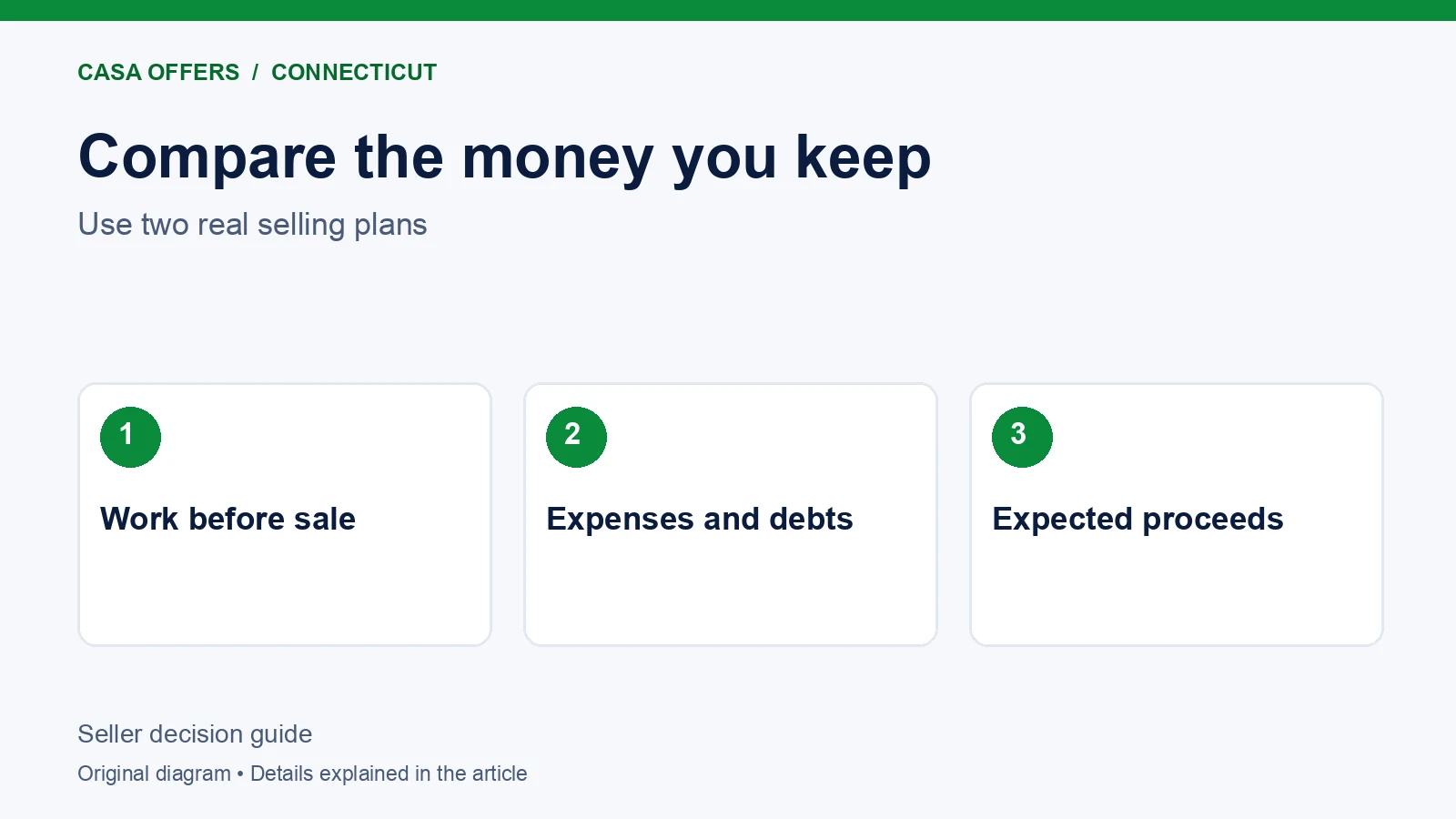
5. Compare the money you keep when selling a house as is
A renovated listing down the street is a possible future version of your property, not money in your account today. Work backward from a realistic selling plan. What must you pay before listing? Who manages the work? What happens to the budget if it takes longer?
Keep the comparison honest in both directions. Renovating may leave you with more. A direct sale may save work, time and out-of-pocket spending. Neither conclusion follows from comparing two headline purchase prices without the expenses.
| Start with | Renovate and list | Sell in current condition |
|---|---|---|
| Expected purchase price | Supported by relevant local sales | Actual written offer |
| Work before sale | Written scope, estimates and contingency | Only what the agreement requires |
| Selling expenses | Actual compensation, concessions and closing estimates | Written allocation of closing and other costs |
| Time and obligations | Carrying costs through a realistic sale date, plus existing debts | Carrying costs through the agreed date, plus existing debts |
| Money left | Estimated proceeds after these items | Estimated proceeds after these items |
Existing debts do not disappear because a buyer covers agreed selling costs. Have the closing attorney obtain the actual payoff and identify taxes, liens and other obligations. For Connecticut conveyance reporting, the Department of Revenue Services provides the state tax information; use your attorney’s transaction-specific figures rather than a generic percentage.
Suppose the written price is $325,000. If Casa covers the selling costs in the agreement and you have no amounts to settle, you can receive the full $325,000. A mortgage payoff, a lien or another amount you owe may come out of the proceeds. Ask for a written estimate that shows what Casa is paying, what comes out of your side and what would actually reach you.
6. Agree on belongings, keys and move-out
Start with what you want to keep. Casa has a crew to clear the house after closing when we agree to take the belongings. We try to donate usable items that local organizations can accept and arrange removal of the rest. You’ve collected things over a lifetime. It helps to know you can take what matters to you and agree in writing on what stays.
Tell us about vehicles, fuel, chemicals or somebody else’s property before you make the move. Put the agreement about belongings, access and keys in writing so both sides know what will be there at handoff.
If you need proceeds to arrange the move, raise that early. Any proposed advance or possession arrangement needs its own written terms, eligibility review and coordination with the closing attorney. Do not schedule a moving truck around a verbal assumption about when money becomes usable.
A useful plan names the responsible people, dates, access arrangements and remaining tasks. The fewer surprises left for the final week, the more valuable a simpler sale becomes.
7. Choose the sale that fits your house and your life
If you have the cash to do the work and time to wait for the right buyer, I’ve told people to repair and list. Get real written estimates and make sure the likely proceeds justify the time and expense. When the two things you’re short on are repair money and time, it’s worth asking what a buyer will pay to take on the house today.
Our Connecticut home-buying page explains the local offer route. If you are comparing the price itself, the cash-offer economics guide walks through value, repair assumptions and net proceeds using Richmond examples; its local comparisons are not Connecticut valuations.
You do not need to finish the house before learning your options. Tell us where it is, what you know about the condition and what you want to happen next. Start with an actual offer and a clear explanation.
Request My No-Obligation Connecticut Offer
If the date matters as much as the repairs, our guide to selling a Connecticut house fast walks through title, the attorney’s schedule and the move.
Questions about selling a house as is in Connecticut
Can I sell without fixing the roof or updating the kitchen?
You can seek an offer for the current condition. Whether a particular buyer will proceed depends on the property, price, financing and contract. Make the required work explicit before committing.
Does an as-is sale mean the buyer cannot inspect?
No. Repair obligations and inspection or cancellation rights are different contract questions. Agree on both and review the deadlines.
Do I need to empty every room first?
Ask what you can leave. Casa can arrange a cleanout when it is part of the agreement. Set aside important papers, medications and things you want to keep before the handoff. Discuss anything unusual with the buyer and write down what stays.
Will I always get less than if I renovate?
The purchase price and your final proceeds are different comparisons. Use realistic estimates for repairs, selling expenses and time. A renovation’s higher price matters only alongside what it takes to achieve it.