
2026-11-28T10:47:19-07:000000001930202611
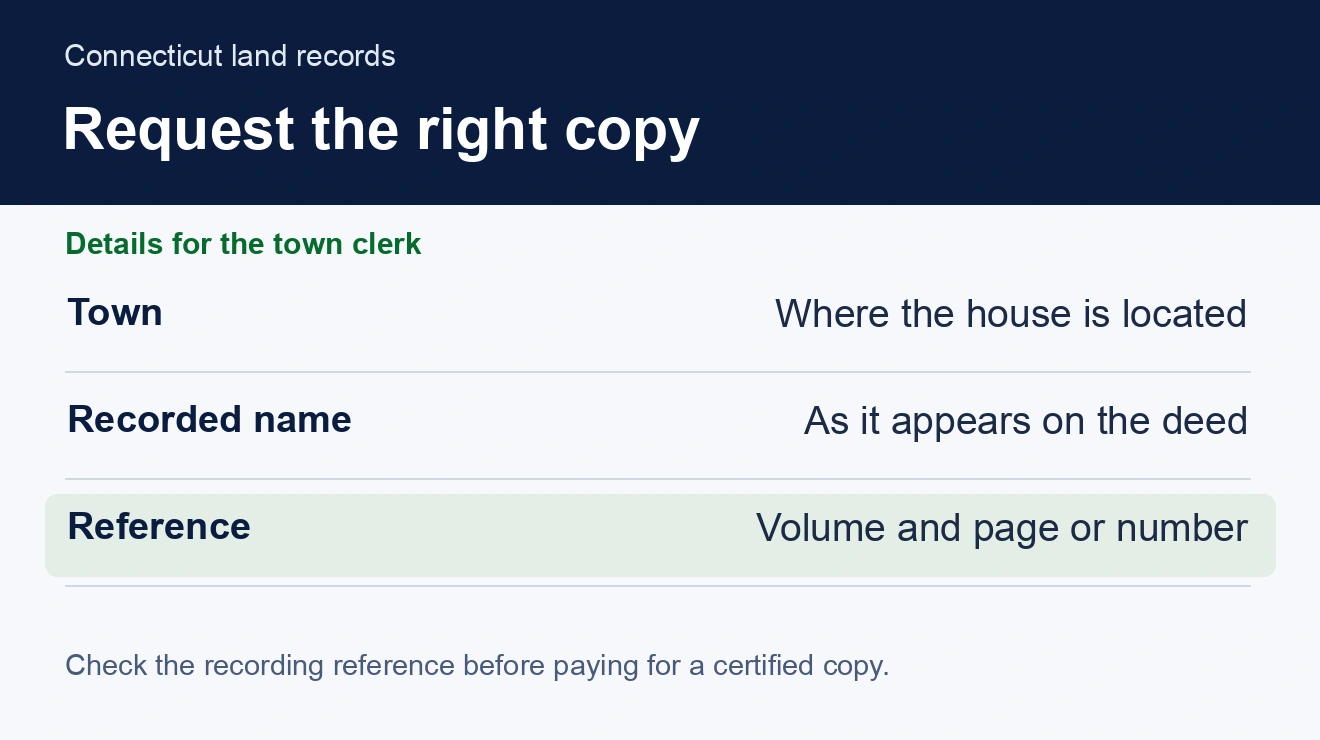
You have the keys and the tax bill. The deed disappeared two moves ago. Connecticut land records are kept by the town or city where the property sits. Start there with the name used at the last purchase. Once you have a recording reference, your attorney can tell you which copy is worth ordering. These are the five parts of the seller’s file I’d sort first.
1. Find the deed in the correct Connecticut land records office
For a Bridgeport house, start with Bridgeport’s Land Records office. In Hartford, start with the Hartford Town and City Clerk. The New Haven City Clerk links to its land records index. If the New Haven index will not load, you can reach Land Records at 203-946-8349. West Hartford keeps its own records. If the mailing address leaves room for doubt, check which municipality sends your property tax bill.
If you bought under a different surname or used two surnames, start with the spelling on your original closing papers. Copy the full recording reference and save all the pages. Ask your lawyer whether a legible copy will do or whether you need a certified one. A search under a family name may bring up several houses owned by the same person.
| Index field | What to keep |
|---|---|
| Grantor / Grantee | Names of the people conveying and receiving the property. |
| Book / Page | Volume and page where the document was recorded. |
| Instrument number | Document identifier if that index supplies one. |
When someone asks for “the deed,” ask which one. A copy from Connecticut land records shows an earlier transfer. The deed you would sign now transfers the property to the buyer. Ask the closing attorney which date or transfer the request refers to.
2. The release for a mortgage you already paid
An old mortgage can still appear in Connecticut land records years after the loan balance reached zero. Look for a recorded release of mortgage tied to that particular loan. A paid-in-full letter from the bank gives your attorney something to work with. Keep that letter and the original mortgage reference so the attorney can check the recorded release.
If you still owe on the loan, find your servicer’s name and a current statement instead. Ask your attorney how to authorize a payoff request through a secure channel. Connecticut’s mortgage and release statutes address both paying off the debt and documenting the release.
3. Papers showing who can sign today
The recorded deed shows how the property changed hands at a particular point in time. Since then an owner may have died, changed a name or opened an estate. Bring the deed and whatever documents you already have. If an estate is open, include the case number and the appointed fiduciary’s name. Your Connecticut attorney can determine what evidence of authority this sale needs.
We have worked with families who learned during probate that there was another possible heir. Bring up that uncertainty as soon as you learn about it. Booking movers first can leave a whole family relying on a signature no one has confirmed. The Connecticut Probate Courts explain their role in estates and title questions.
4. The residential property condition report
For residential sales covered by Connecticut’s disclosure law, the seller must provide the written condition report before the buyer signs the covered purchase document. There are exemptions, and certain properties require an additional foundation report. Ask your attorney which applies and use the state’s current residential forms before you accept an offer.
Say the basement took on water when a pipe broke. Pull the plumber’s invoice if you have it and write down what happened afterward. A receipt can document the pipe repair. It says little about what happened to the wet floor. Give the buyer the account you can support. Our Connecticut guide to selling as is walks through that conversation.
5. The permit or final inspection record for past work
If you finished a basement, enlarged a room or replaced a major system, put the permit and any final inspection record you already have in the file. In Bridgeport you can ask the building department for a property records search. Connecticut land records can show who received a deed. For the inspection sign-off on your addition, go to the municipal building department. If something is missing, ask your lawyer what actually needs to be verified before you pay for inspections or copies.
When you speak with Casa, tell us which house you want to sell and which document is worrying you. Keep the originals. If a move date is riding on the sale, our Connecticut closing timeline shows which steps you can start now and which still need an attorney’s confirmation.