
2026-11-28T15:40:01-07:000000000130202611
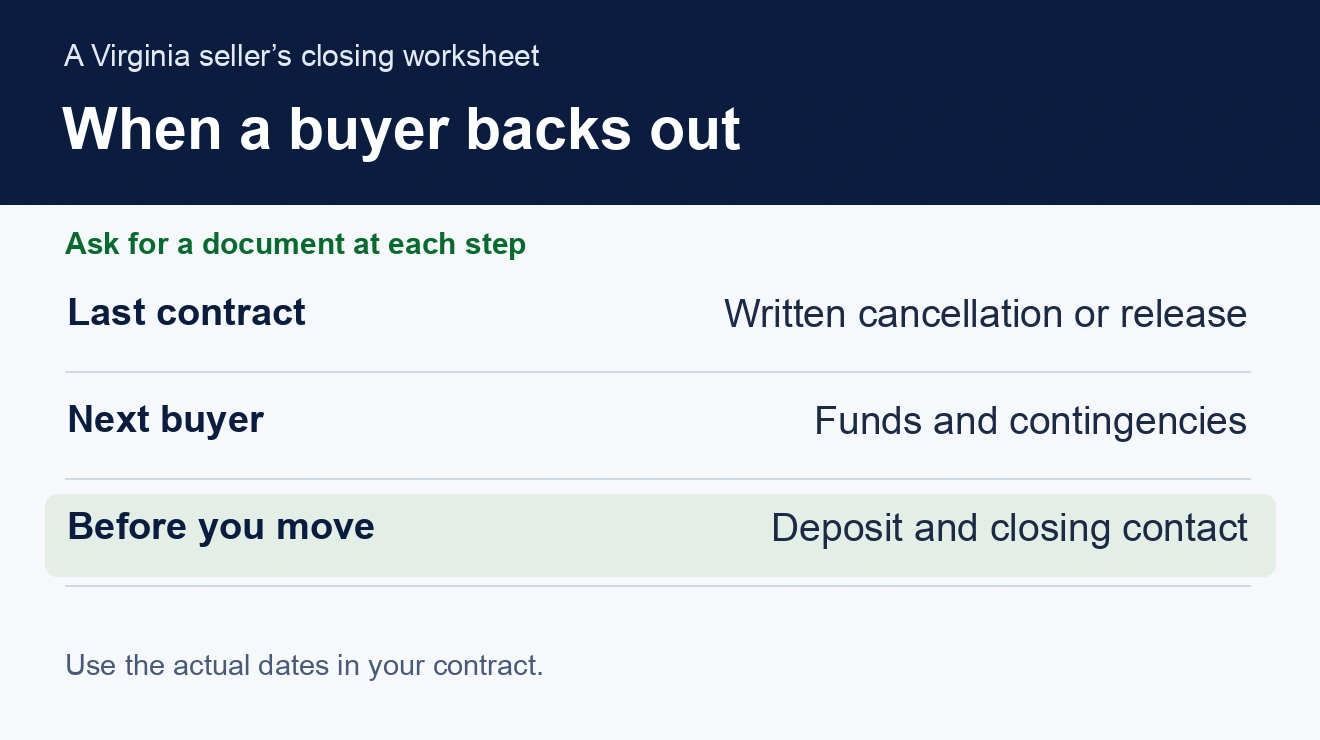
Your buyer walked. Your mortgage didn’t. If your home sale fell through in Virginia, first find out in writing where the contract and deposit stand. Then ask the next buyer to show where the money is coming from and name the conditions that still stand between you and closing.
If your Virginia home sale just fell through, you may already have started packing, scheduled a move, or decided which bills the sale would finally let you pay. Now you are looking at the same house with less time and a lot less patience.
Another offer can feel like relief. Especially a bigger one. But after one closing disappears, the question gets sharper: What would make this buyer more likely to finish?
You have good reason to ask. In its September 8 report, Virginia REALTORS said 34% of respondents to its August 2026 survey had experienced a failed pending sale, up from 26% in both June and July. Those percentages describe surveyed REALTORS, not the share of contracts that failed. Inspection problems and mortgage approval were leading reported causes.
The useful response is to find out what broke, decide how much more waiting your household can carry, and make the next buyer explain how the sale will actually get done.
My home sale fell through. Can I accept another offer?
Before you rush into another agreement, get a plain answer about the last one. What ended the sale? What had been completed? What was still unresolved when the buyer walked? If your home sale fell through after inspection, ask for the written repair request before paying a contractor.
If repairs were the sticking point, identify the actual work and the disagreement. Did the buyer want a repair, a price change, or an answer nobody could provide? If financing was the issue, ask what changed after the offer. You need enough detail to recognize the same weakness in the next conversation.
Keep the inspection information, written requests, and timeline together. Ask your agent or closing attorney to explain any unresolved cancellation or deposit questions before you commit again. A failed sale is frustrating enough without guessing about what the old agreement still requires.
Then write down your own constraint. How long can you keep carrying the house? What repair can you realistically fund? What date matters to your family? That answer belongs in the next negotiation.
Five questions to ask the next buyer
Scott at Casa Offers has a blunt name for this trap: “chasing a fake high offer.” The attraction is obvious: somebody says the number you have been waiting to hear. For a moment, the problem feels solved.
Keep the number on the table. Make the buyer put some substance behind it. These are the questions to ask before you build another set of plans around a promised closing.
1. Who is actually buying the house?
Ask whether the person making the offer intends to purchase the property or find another buyer to take over the contract. Get the purchasing name and ask who will be responsible for moving the sale forward.
A plan involving another buyer needs an explanation: has that buyer been identified, and what happens if they do not proceed? You are entitled to understand whose decision your move depends on.
2. What supports the money behind the offer?
If the offer is described as cash, ask for current proof of funds tied to the proposed purchase. Have your agent or closing professional help you evaluate it. A confident voice on the phone is easy to produce.
If a lender is involved, ask what has been verified and what remains outstanding. The useful conversation is specific: who is handling it, what is still needed, and when will you get the next update?
3. What could change the price or stop the sale?
Ask the buyer to walk through the conditions in the proposed agreement. What still has to happen? What inspections or approvals are planned? Does another property have to sell first?
Put your known repair concerns into that conversation early. If you cannot pay for a new roof or HVAC system, say so. You need to know whether the offered price reflects the house as it stands, and what could trigger another negotiation.
4. What evidence shows the closing is moving?
Ask about the earnest money: how much is promised, when it is due, and who will confirm receipt. Ask which closing office is handling the transaction and whether a file has been opened.
These are useful checkpoints. Have the appropriate professional explain the deposit terms, and verify progress through the people responsible for it. “Everything is fine” becomes more useful when somebody can tell you what was completed today.
5. Who owns the next step?
A closing date on a page is the destination. Ask for the steps that lead there: the next document, the next review, the person responsible, and the date you should hear back.
Agree on how updates will arrive. If a milestone slips, ask what changed and how it affects the remaining timeline. You should be able to explain the plan without repeating, “They said they would handle it.”
What will another month cost after a home sale fell through?
A seller with room to wait has a different choice from a seller struggling to cover the next payment. Be honest about which situation you are in.
Look at the payments coming due while you still own the house: mortgage, utilities, insurance, and other bills that apply to you. Add the work and disruption of preparing for another buyer. Use your actual dates and obligations. An attractive asking price does not pay those bills while you wait.
If listing again fits your time and budget, take the lessons from the failed sale into that process. If repairs and another uncertain wait are more than you can carry, get an as-is offer you can evaluate alongside that option.
Suppose one offer would leave you $4,000 more on paper but requires $3,000 of repairs and another month with $1,400 in interest, insurance, taxes and utilities. In that example, you would keep $400 less. Use your own figures. If you count interest here, account for principal through the mortgage payoff so you don’t count the same payment twice.
At Casa, our usual minimum earnest-money deposit is $1,000, held by the title company. Ask the closing office to confirm it arrived. If you already have a listing agent, bring the written offer to them so you can compare the dates and conditions together. Here are the checks Richmond sellers can use to verify a buyer.
Give the next offer something real to answer
Tell Casa Offers what happened, what condition the house is in, and when you need to move forward. Start with the hard part: the buyer who backed out, the repair you cannot fund, or the payment that is getting difficult to make.
Request an offer for your Virginia house. Bring these five questions with you and ask us to explain the proposed price, conditions, and timing. You have already spent enough energy planning around a sale that did not finish. Take the next step with something concrete to compare.