
2026-11-26T14:16:11-07:000000001130202611

By Scott Morse · Casa Offers · November 26, 2026
“I’m exhausted. I’m tired.” That’s a call I know well. Sometimes the rent has gone unpaid for months. Sometimes there’s damage. Sometimes you know the tenants well and can’t bring yourself to raise the rent enough to keep the house going. You can look at selling the rental while they still live there. The lease and the buyer’s plan will shape what happens next.
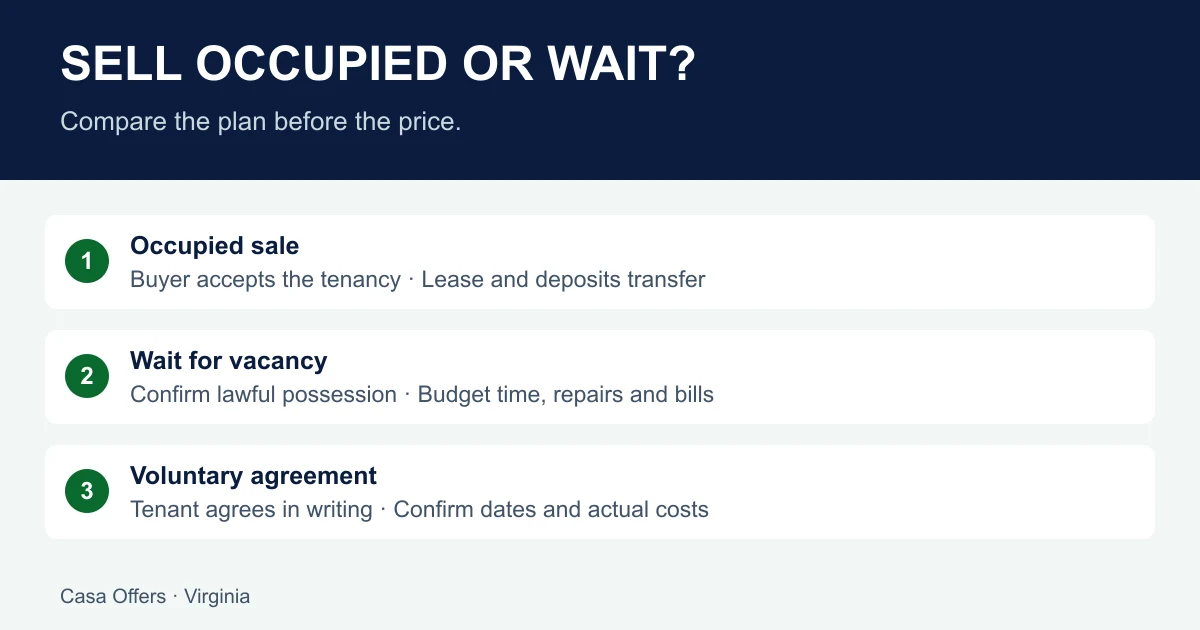
Selling a house with tenants in Virginia is possible without waiting for the house to be empty. The buyer must understand the tenancy being purchased. A sale does not automatically cancel a valid lease, and a cash offer does not erase the tenant’s rights. Your first decision is whether to sell occupied, wait for lawful vacancy, or negotiate a voluntary move-out. Settle that before promising a closing date.
The rental was supposed to give you more freedom. Now every repair, unanswered message and lease renewal feels like another obligation. You want out, but you don’t want a tenant dispute or a buyer disappearing because the house isn’t empty.
You need a sale that fits the property you actually own today. These five checks help Richmond-area landlords turn “I want to sell” into a plan a buyer can follow. Selling a rental property gets easier to evaluate when the lease, the buyer and the money are on the same page.
1. Selling a house with tenants before checking the lease
A Henrico lease nearly derailed a purchase. The owner sent the notice two days after automatic renewal. That agreement called for 60 days’ advance notice, so the notice missed the contractual deadline by 62 days. We had to work through the tenants’ needs and discuss an agreement directly. Read the renewal clause early and have a Virginia attorney verify the date and service method before you promise a vacant house.
Pull the signed lease, renewals and amendments before you tell anyone the house will be vacant. Check the end date, renewal language, notice requirements, sale provisions and any written promises you’ve already made. An old expiration date doesn’t prove that the current tenancy has ended.
For an ordinary sale, plan around the existing rental agreement unless a lawful termination or a genuine agreement changes it. Virginia’s landlord-transfer provision expressly addresses a sale of a dwelling subject to a rental agreement. Don’t treat transferring the deed as a substitute for resolving possession.
Fixed term and month-to-month need different plans
A fixed-term lease and a month-to-month tenancy are not interchangeable. Under Virginia Code § 55.1-1253, the ordinary month-to-month rule is written notice at least 30 days before the next rent due date, unless the agreement provides a different notice period. That is not simply “30 days from today,” and special multifamily rules can apply.
The same section allows landlord and tenant to agree in writing to end a rental agreement early. A voluntary move-out arrangement should spell out the date, possession, any payment and how the deposit will be handled. Have a Virginia attorney check a disputed lease or proposed termination before you commit to delivering an empty house. Subsidized housing, foreclosure and manufactured-home parks can involve additional rules; this guide concerns an ordinary residential house sale.
2. Accepting an offer without settling who stays
Casa buys the property itself. Sometimes we keep the tenants after the sale, depending on the rent, the lease and the condition of the property. Ask who will sign as buyer and whether any assignment is permitted by the contract. If your timeline is tight, get a written offer for the house occupied before deciding you have to wait for vacancy.
If everyone is interested in an earlier move-out, sometimes a buyer or landlord proposes paying for a voluntary surrender. People call that cash for keys. Discuss it with a Virginia attorney. Give the tenant a genuine choice, and get the amount, date and conditions in writing before counting on vacancy.
“Cash buyer” tells you something about financing. It doesn’t tell you whether the buyer accepts an occupied house. Ask that question directly, before spending weeks on an offer that depends on a move-out you haven’t secured.
Selling a house with tenants to an investor means showing what the rental actually produces: collected rent, lease terms, expenses, repairs and the tenancy after closing. A buyer planning to live there may need vacant possession on a particular date. Neither plan should be left to an assumption. Before selling a rental property, get the occupancy condition into the written offer.
- Selling occupied: the contract should address the existing tenancy and the records, deposits and rent adjustments the buyer will receive.
- Waiting for vacancy: confirm the lawful timeline, then budget for the period without rent, the turnover work and the sale itself.
- Agreeing on an early move-out: make it voluntary, documented and realistic before you promise that result to a buyer.
Also ask who will actually buy the property, how the purchase is funded, what inspections or contingencies remain, and whether the agreement can be assigned. A high number attached to unresolved conditions is still an unresolved sale.
Get a comparison before you promise vacancy. Tell Casa Offers the house is occupied, when the lease ends and what repairs you know about. Ask for an offer and a written explanation of the occupancy assumptions, so you can compare it with listing the property.
Compare an Offer for My Rental
3. Letting showings turn into a tenant dispute
In Dinwiddie, we sat down with the household and listened to why they were upset. They told us the old property manager hadn’t answered their repair requests. Within 30 days we replaced the refrigerator, dishwasher, stove, microwave, washer and dryer. We also told them we planned to review the rent at lease renewal. When we meet with tenants, we explain what the visit is for and who they can contact. Courtesy starts with acknowledging that it’s their home.
You own the property. The tenant still lives there. Treating every viewing as an emergency can make an already difficult sale harder.
Virginia’s access statute covers inspections and showing the home to prospective purchasers. It says tenants must not unreasonably withhold consent, and landlords must not abuse access or use it to harass. Except for emergencies or when impractical, the landlord gives notice of an intended entry and enters at reasonable times.
The statute’s specific 72-hour provision concerns routine maintenance the tenant did not request. Don’t copy it into your plan as a universal showing rule. Review the lease and the actual access purpose; use counsel to resolve a refusal or contested notice.
When selling a house with tenants, make the appointment plan specific: reasonable windows, who is coming and how access will work. Ask before taking or sharing photographs of personal belongings. Give your agent or buyer a single point of contact. A predictable schedule is easier to manage than a series of surprises.
Changing locks, cutting utilities or making the house unsafe to force a move is no shortcut. Virginia law provides tenant remedies for unlawful exclusion and interruption of essential services. If possession is disputed, use the lawful process rather than creating a second problem.
4. Leaving deposits and rent out of the closing plan
The first things I ask for are the rent roll, what the tenants actually paid, and the amount held in deposits. Bring the current lease and amendments, any balance or credit, past notices and open repair requests. Missing records and unclear credits can change the work the buyer has to take on. Give the closing team time to settle who accounts for each amount.
When selling a rental property, the security deposit isn’t extra sale proceeds. Reconcile the amount held, any documented deductions and any prepaid rent with the buyer and settlement agent. Put the agreed transfer or credit on the settlement paperwork so there is a clear record.
Under § 55.1-1226, the owner at the end of the tenancy can be responsible for a deposit owed to the tenant even if the prior owner failed to transfer it. That’s a reason for both sides to settle the accounting before closing. An ownership change alone is not the same event as a tenant moving out and receiving a final deposit disposition.
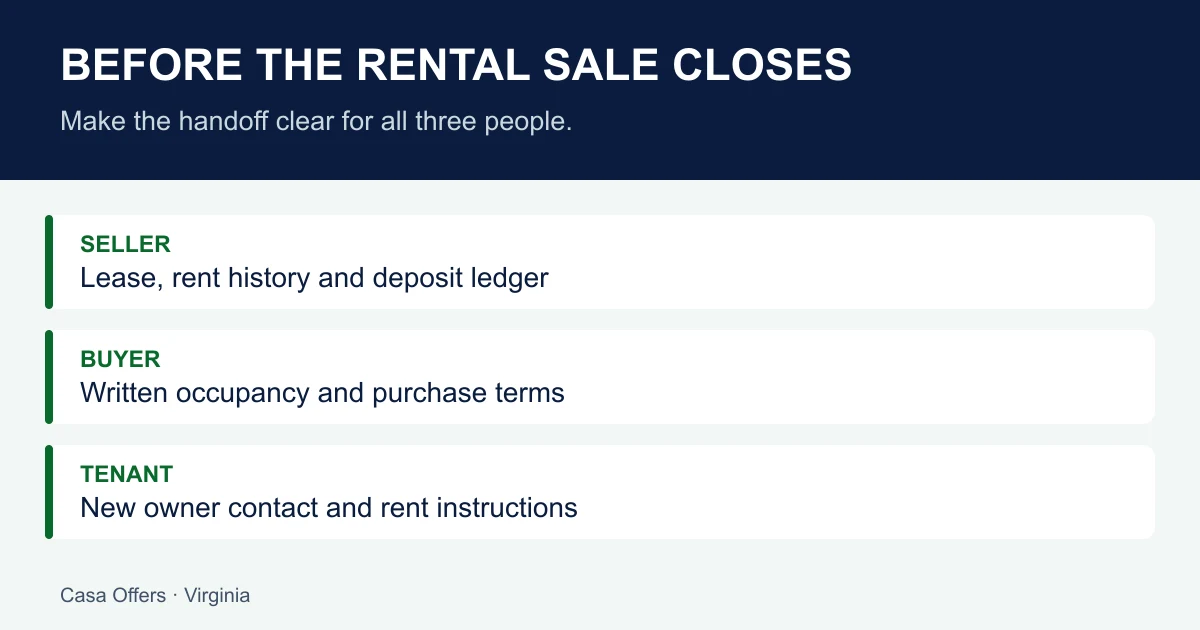
§ 55.1-1216 also requires notice of the sale and the purchaser’s name, address and telephone number. Coordinate the notice, payment instructions and management contact so the tenant knows who owns the home and where the next rent payment goes.
Build one useful buyer file
- Lease, renewals, amendments and relevant notices.
- Rent history, current balance and a separate deposit/prepaid-rent ledger.
- Known repairs, inspection reports and unresolved code notices.
- Property expenses, management agreement and service obligations.
- A written occupancy, access and closing-handoff plan.
Protect tenant information when assembling that file. Virginia’s tenant-record confidentiality rules include specific permitted disclosures. If you use the contract-purchaser exception to share records, the purchaser must agree in writing to keep them confidential. Don’t put applications, identification or bank details into a public listing folder.
5. Comparing prices while ignoring the cost of waiting
An occupied house can draw a lower offer if rent collection is uncertain, the lease limits what a buyer can do, or there are repairs to take on. A stable tenant can appeal to some rental buyers. If you need to sell now, price the house under the actual lease and compare that with how much it would cost you to hold it until you can deliver it vacant.
Selling a house with tenants and selling an empty house can attract different buyer pools. That doesn’t automatically mean waiting leaves you with more money. For selling a rental property, compare both routes using the same starting point:
Sale price minus loan payoff, selling costs, agreed credits, work and the net cost of holding = estimated cash before sale-related taxes.
For the holding period, count rent you realistically expect to collect against mortgage payments, insurance, taxes, management, maintenance and owner-paid utilities. Don’t subtract all the bills while ignoring incoming rent, or assume unpaid rent will arrive because it appears on a ledger. Keep deposit transfers and rent prorations separate so you don’t count them twice.
For the vacancy route, add any voluntary move-out cost, empty-house expenses, cleanup and repairs. Use written estimates and a credible schedule. Our Virginia guide to repairs you can skip before selling helps separate optional upgrades from problems a buyer will assess. No automatic “occupied property discount” applies to every house; compare actual terms and net proceeds.
A worksheet for selling a rental property: occupied versus vacant
Ask for two written estimates built around the same house. One assumes the buyer accepts the current tenancy. The other assumes you can lawfully deliver vacancy, complete the proposed work and then close. Use the anticipated settlement date for each estimate. As the Consumer Financial Protection Bureau explains, a payoff includes interest through the intended payoff date and may include other unpaid charges; today’s statement balance is not a substitute.
| Line to compare | Occupied sale | Sale after vacancy |
|---|---|---|
| Purchase price | Buyer’s written occupied offer | Supported sale estimate after the work |
| Loan payoff | Quote for this closing date | Quote for the later closing date |
| Selling costs and credits | Agreed costs for this offer | Listing, settlement and negotiated costs |
| Work before closing | Only work you agree to complete | Written turnover and repair estimates |
| Net cost of holding | Owner costs less expected rent collected | Occupied wait plus costs after vacancy |
| Voluntary move-out expense | Include only if part of this plan | Include any agreed payment and expense |
| Cash before sale-related taxes | Price less the costs above | Price less the costs above |
The useful question is how much extra the vacant sale must bring to pay for its extra costs. Ask what happens if the tenant’s departure or contractor’s completion moves back. Who covers that additional month, and does your next buyer still have to close?
Keep the deposit and rent adjustments in a separate reconciliation with the settlement agent. This worksheet compares your cash outcome, not taxable profit. If selling a rental property would leave too little to pay off the secured debt and closing obligations, involve the lender and settlement professional before accepting a price you cannot carry through.
A Richmond check before you price the work
Confirm whether the address is in the City of Richmond, Henrico or Chesterfield. A Richmond mailing address alone doesn’t identify the responsible local government. For a city property with unresolved maintenance issues, pull the actual notice and follow up with Richmond Property Maintenance and Code Enforcement. Its process identifies violations and correction requirements; an offer to buy as-is doesn’t make an existing notice disappear.
Give each potential buyer the same repair and occupancy facts. Otherwise you’re comparing one informed offer with another number that may change after the walkthrough. You can also review our Richmond home-selling options when choosing the route that fits your situation.
Check the tax plan before the closing date
If the rental used to be your own home, don’t assume a social-media tax shortcut tells you what you’ll keep. The IRS’s Publication 523 explains eligibility for the home-sale gain exclusion and limits involving rental use and depreciation. Renting a property for two years doesn’t automatically make the entire gain tax-free.
A qualifying Section 1031 exchange concerns business or investment real property and can defer qualifying gain; it isn’t an automatic tax exemption on an ordinary cash sale. If an exchange or former-primary-home exclusion is part of your exit plan, have your tax adviser structure it before closing. Your settlement check and your after-tax result are different numbers.
Common questions about selling a house with tenants
Can I sell if the tenant isn’t paying rent?
You can seek a buyer, but disclose the actual payment and possession situation. Don’t present a disputed balance as dependable income or promise that a sale will remove the tenant. Have the notices, lease and any court documents reviewed, then make sure the purchase agreement matches the situation.
Do I have to renovate before selling?
You can compare an as-is offer with a repair-and-list plan. Selling as-is doesn’t cancel existing maintenance duties while you own the rental, tenant rights or applicable disclosure obligations. Share known problems and ask exactly what the buyer expects you to complete.
How do I sell rental property with tenants if I live elsewhere?
Start with the same lease and financial records, then name the person who can coordinate lawful access, inspect the house and communicate locally. Confirm whether your management agreement includes sale or termination obligations. Selling a rental property from out of town should not depend on a buyer discovering missing keys, unresolved repairs or a management fee at the closing table.
What should I do first?
Find the lease, confirm the rent and deposit figures, and decide what possession you can truthfully offer. Then get comparable written terms for selling occupied and waiting. You don’t need to fund a renovation or promise a move-out just to find out where you stand.
Ready to stop carrying the rental? If you’re selling a house with tenants, send Casa Offers the address, lease situation and known condition. Get your number first, then compare it with the cost and time of your other options.
Sources checked October 20, 2026. General seller information; lease disputes, termination notices and tax treatment depend on your specific facts and require the appropriate professional advice.