
2026-11-28T10:46:37-07:000000003730202611
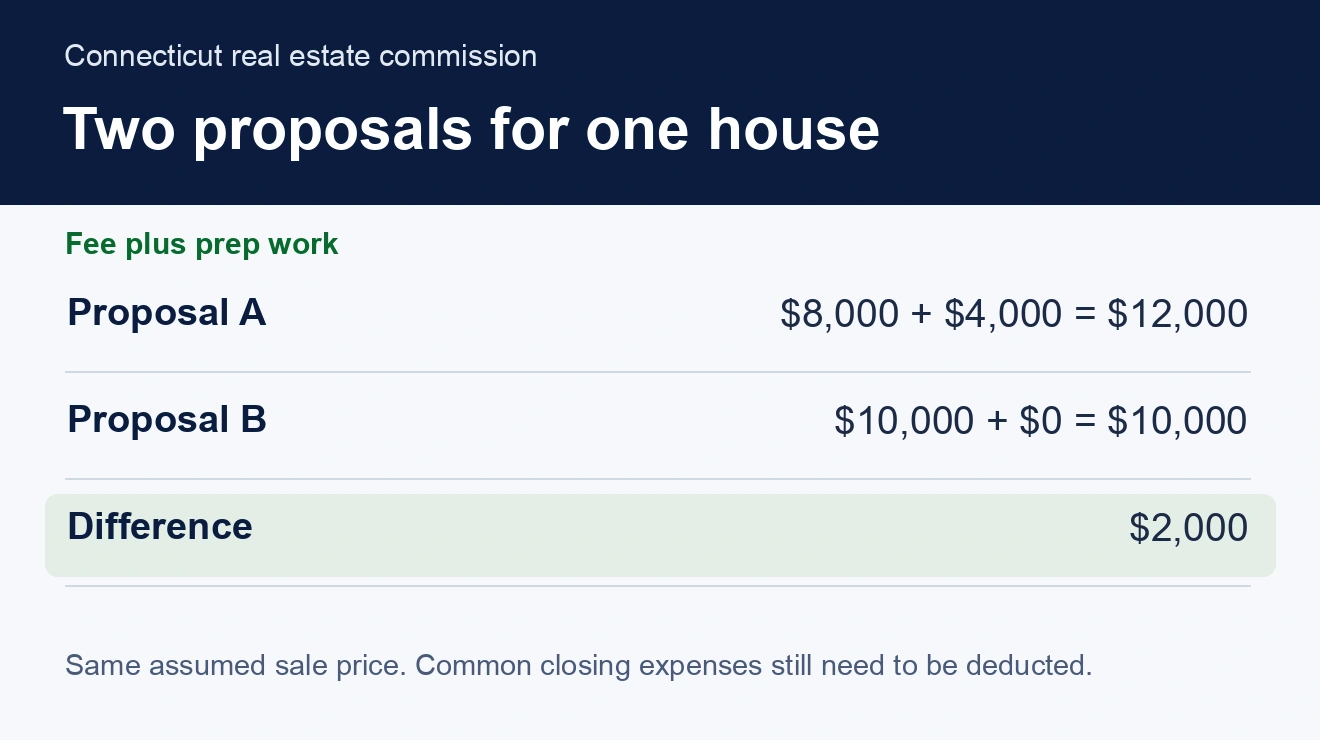
Before you hire a listing agent, ask for a dollar estimate using your address and the month you want to move. Connecticut real estate commission is one line on that estimate. A lower fee can come with a plan to paint, empty the house and carry it another month. A fair first question is, “If we follow your plan and it sells for your price, what would I take home?”
1. What does the Connecticut real estate commission cover?
Ask, “At the price you expect, how much would I pay your brokerage in dollars?” Get the answer in writing. If the agent quotes a percentage, have them show the dollars at two possible sale prices. For a flat fee, ask what work is included, when the fee is earned and what you would owe if you withdrew the listing. Connecticut lets you negotiate compensation and the length of the listing agreement. The state explains the process in its guide to working with a seller’s agent.
If a neighbor has already asked to buy your house, bring it up before you sign. Ask what fee the brokerage would earn if that neighbor buys. Get any exception you negotiate into the listing agreement.
If your family makes these decisions in Spanish, ask the person handling the sale to walk you through an actual clause in Spanish. Write down the agent’s legal name and the brokerage named in the agreement. You can check both in Connecticut’s license lookup.
2. Which payments is the buyer asking you to cover?
A purchase offer might ask for a credit toward the buyer’s closing expenses. It can also ask you to pay some of the buyer agent’s compensation. Ask your agent to point to each obligation in the actual paperwork and say who receives it. Hearing the same number at the kitchen table and seeing it on the offer later is an easy way to subtract it twice.
For instance, a $300,000 offer with a $4,000 credit leaves $296,000 before your other costs. An offer at $298,000 with no such credit leaves $2,000 more at this stage. You still need to compare the financing, conditions and closing dates.
3. What do you have to spend to earn the proposed price?
Have each agent write two lists. One covers what the brokerage pays for, including photos if they are part of the fee. The other covers work you pay for before the first showing. If water gets into your basement, that distinction can matter more than a small difference in commission. A painter’s estimate tells you little about what it will cost to stop the leak.
| Proposal | Costs before common expenses |
|---|---|
| Agency A | $8,000 fee and $4,000 in prep work. Total $12,000. |
| Agency B | $10,000 fee and $0 in prep work. Total $10,000. |
In this example, both agents expect the house to sell for $300,000. Proposal A leaves $288,000 and proposal B leaves $290,000 before the costs they have in common. If A’s repairs bring in over $2,000 more at closing, the order could reverse. Ask to see recent sales that support that expectation, then decide whether you have the cash to do the work.
4. How much goes toward Connecticut conveyance tax?
The Connecticut real estate commission you negotiated with your agent is separate from the tax on the transfer. Ask your closing attorney for an estimate of state and municipal conveyance tax and any exemption that applies to your transaction. Give them the town where the house sits. An agent based in Hartford might sell your West Hartford house, but the attorney needs the property’s municipality to work out the local tax. Connecticut publishes conveyance tax and Form OP-236 instructions.
5. What would a month of waiting cost you?
Pull a recent bill for insurance, utilities, property tax and mortgage interest. Allow for another month or two if the preparation runs long or a buyer needs a later closing. Use the same assumptions on each estimate. Count the outstanding mortgage principal once when working out the money you take home.
If you have time to prepare the house and money to do the work, listing can be a good choice. Casa buys directly. You can ask what we would pay for the house in its current condition and compare the written terms with the agent’s estimate. If you already have a listing agreement, include your agent and have them identify any compensation you have agreed to. Our written-offer comparison gives you a place to put the numbers side by side.